
Your pet's weight chart
Dog, cat, rabbit, guinea pig or horse: record each weigh-in, in kilos or grams, and see on a chart whether the weight is steady, going up or going down. Galia reminds you when to weigh again.
Record each weigh-in, in kilos or grams, and follow the chart.
Download the app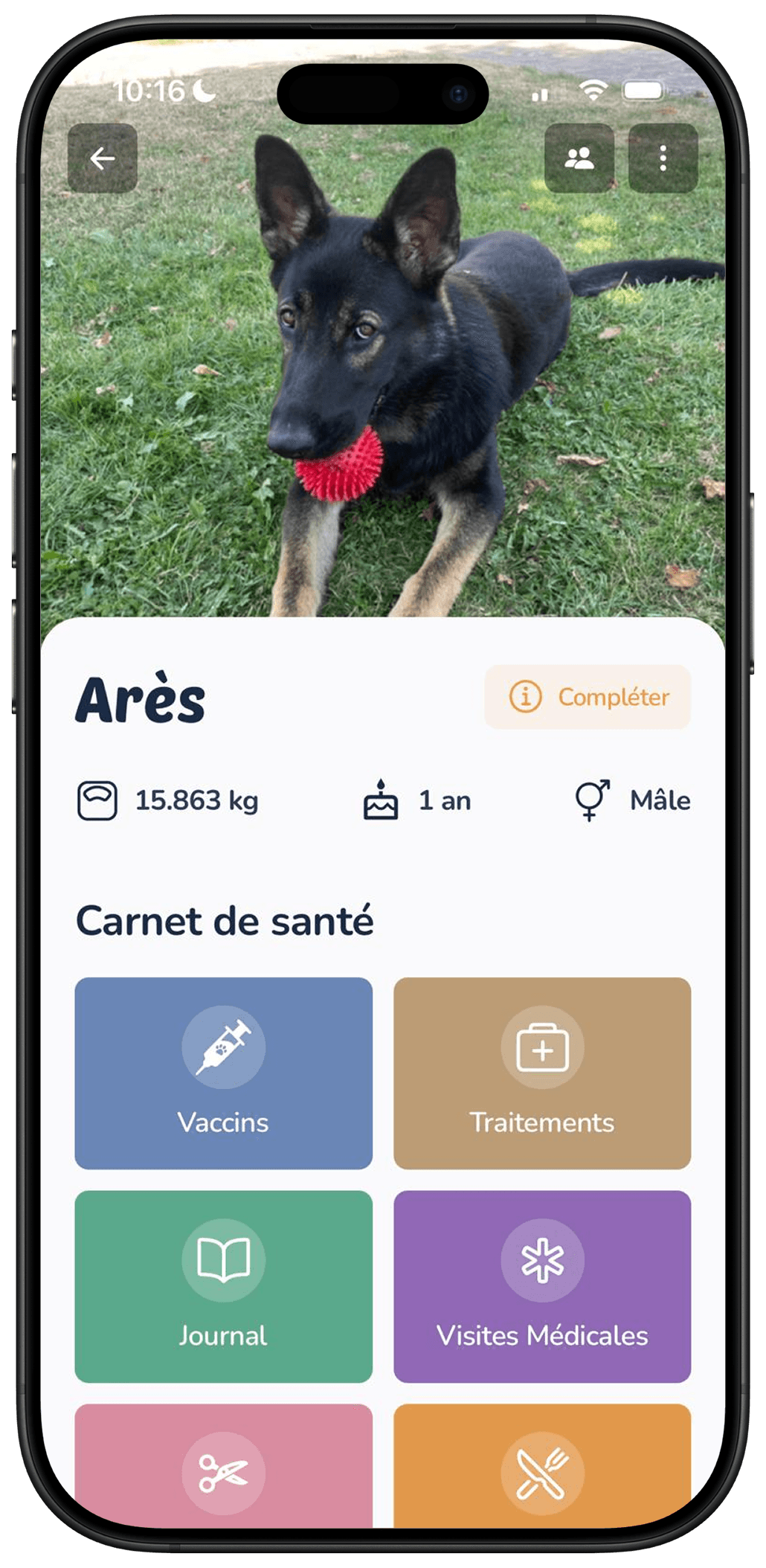
Why track your pet's weight?
A few hundred grams go unnoticed day to day: fur hides gradual changes (PetMD), and in a small pet a few grams already matter. Yet weight loss can be the first sign of an illness (Dr Garnodier, SantéVet). Recorded weigh-ins show whether the weight is moving, and since when.

What a weight chart shows
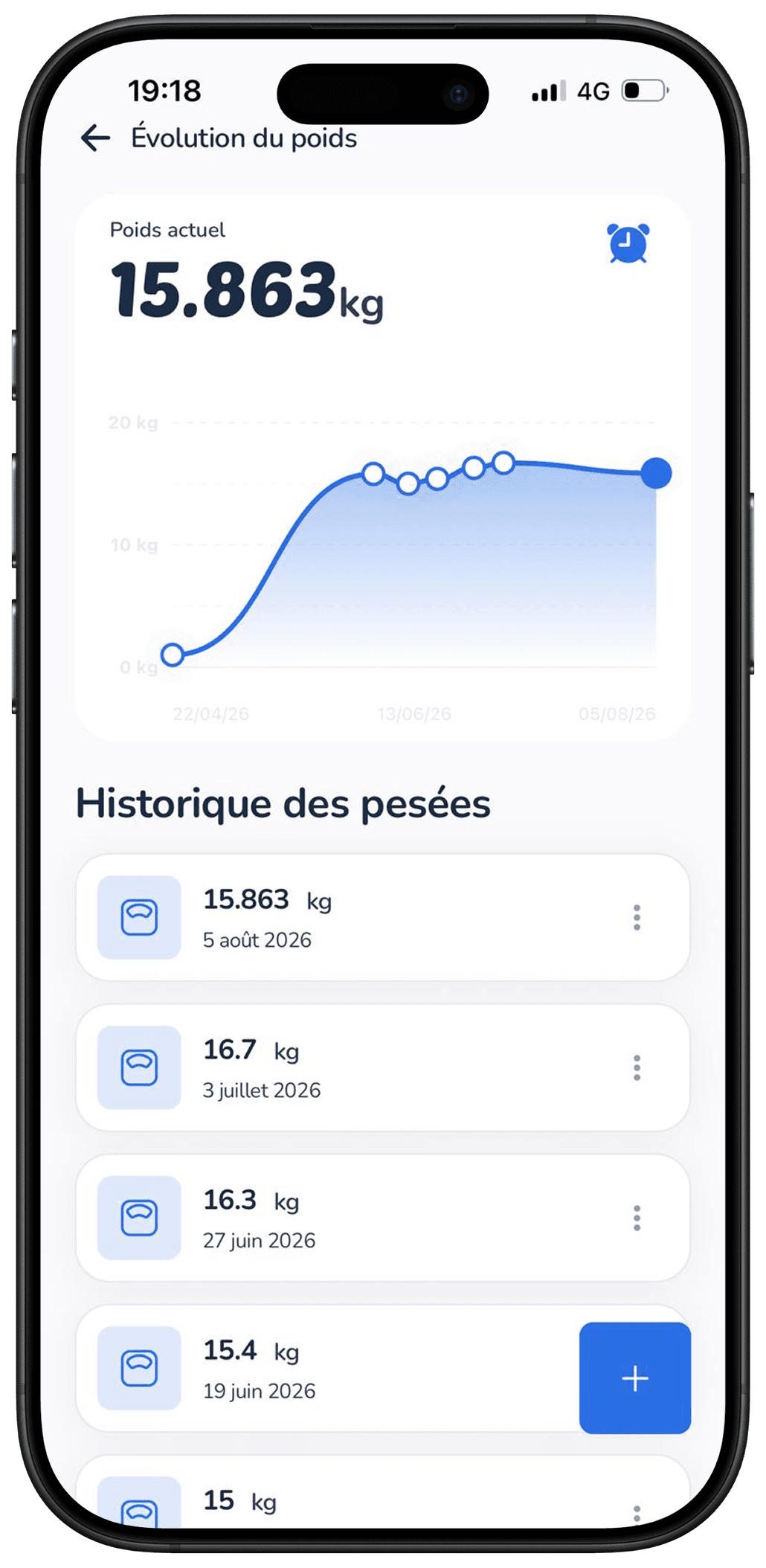
Each point is a weigh-in. Joined over time, they show whether the weight is steady, going up or going down, and since when.
Illustrative example: made-up dates and weigh-ins, not a reference. The weight to aim for is set with your vet.
Weight tracking, in 3 steps
Weigh your pet
At home or at the vet, always on the same scales.
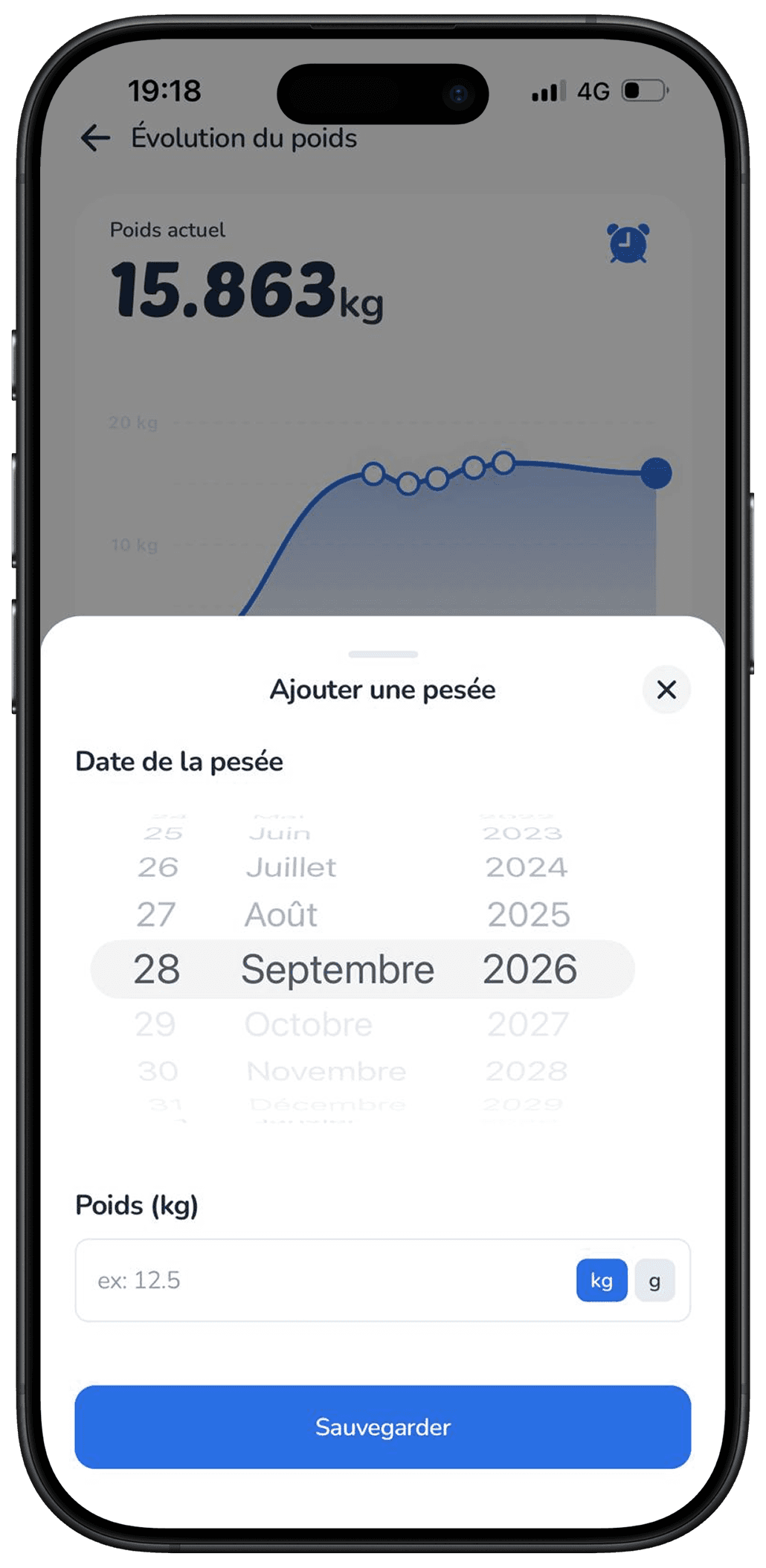
Add the weigh-in
The date and the weight, in kilos or grams.
The chart updates
The new point appears straight away, with the weigh-in in the history.
A weigh-in reminder on your schedule
Turn on the reminder from your pet's weight screen and pick the interval, from 1 to 90 days. How often to weigh and the weight to aim for are decided with your vet.
Set the interval day by day, and turn the reminder off whenever you like.
When the day comes, Galia sends you a notification with your pet's name: no need to remember.
Each weigh-in you add pushes back the next reminder: no notification if you've just weighed your pet.
Each of your pets has its own schedule, whatever its species.
Weigh-ins shared with your loved ones
Weighed at home, at a relative's or by whoever is looking after your pet: every weigh-in lands on the same chart, in the profile shared through the Circle.
Discover the Circle

Track your pet's weight for free
A weigh-in now and then, and the chart does the rest.


Frequently asked questions
For a healthy adult dog or cat, about once a month at home (SantéVet), on top of the weigh-in at the vet. A puppy should be weighed at least every 3 to 4 weeks in its first months (PetMD), a rabbit once a month (MediRabbit). For an older, ill or dieting pet, or another species, follow the schedule your vet sets.
Weigh a cat, small dog or rabbit on kitchen or baby scales: put down a towel or a light box, zero the scales, then place your pet (SantéVet, MediRabbit). Weigh a medium dog in your arms on bathroom scales: your weight with the dog minus your weight alone (SantéVet). Weigh a large dog at the clinic, which often has scales. Always use the same scales (PetMD). For a rodent, bird or reptile, ask your vet how to weigh it.
Rapid, significant or unexplained weight loss calls for a vet visit (SantéVet), especially in an older pet or alongside other signs: less appetite, tiredness, vomiting, diarrhoea. In rabbits, one vet recommends an exam once 10% of the usual weight is lost (MediRabbit). Bring your weigh-ins to the appointment.
The current weight and how every weigh-in changes over time. Tap a point on the chart to see that weigh-in's weight and date. The history lists every entry, and you can edit or delete any of them.
No. Galia shows how the weight changes, but the weight to aim for should be set with your vet, based on your pet's species, breed, age and body type. Any diet should be decided with your vet too.
Sources
Guidelines checked on 2 November 2026. They don't replace your vet's advice.
- SantéVet, Claude Pachetau: “Pourquoi peser son chien ou son chat ?” (French) (updated 24/07/2023)
- SantéVet, Dr Juliette Garnodier, vet: “Chat maigre” (French) (updated 22/09/2026)
- PetMD, with Dr Susan O'Bell and Dr Matthew Rooney, vets: “How to Weigh Your Dog at Home” (18/01/2017)
- PetMD, reviewed by Dr Brittany Kleszynski, vet: “Why Is My Cat Losing Weight?” (updated 09/06/2026)
- MediRabbit, Dr Amir Maurer, vet: “Recommendation to all rabbit owners” (undated)